Episode Transcript
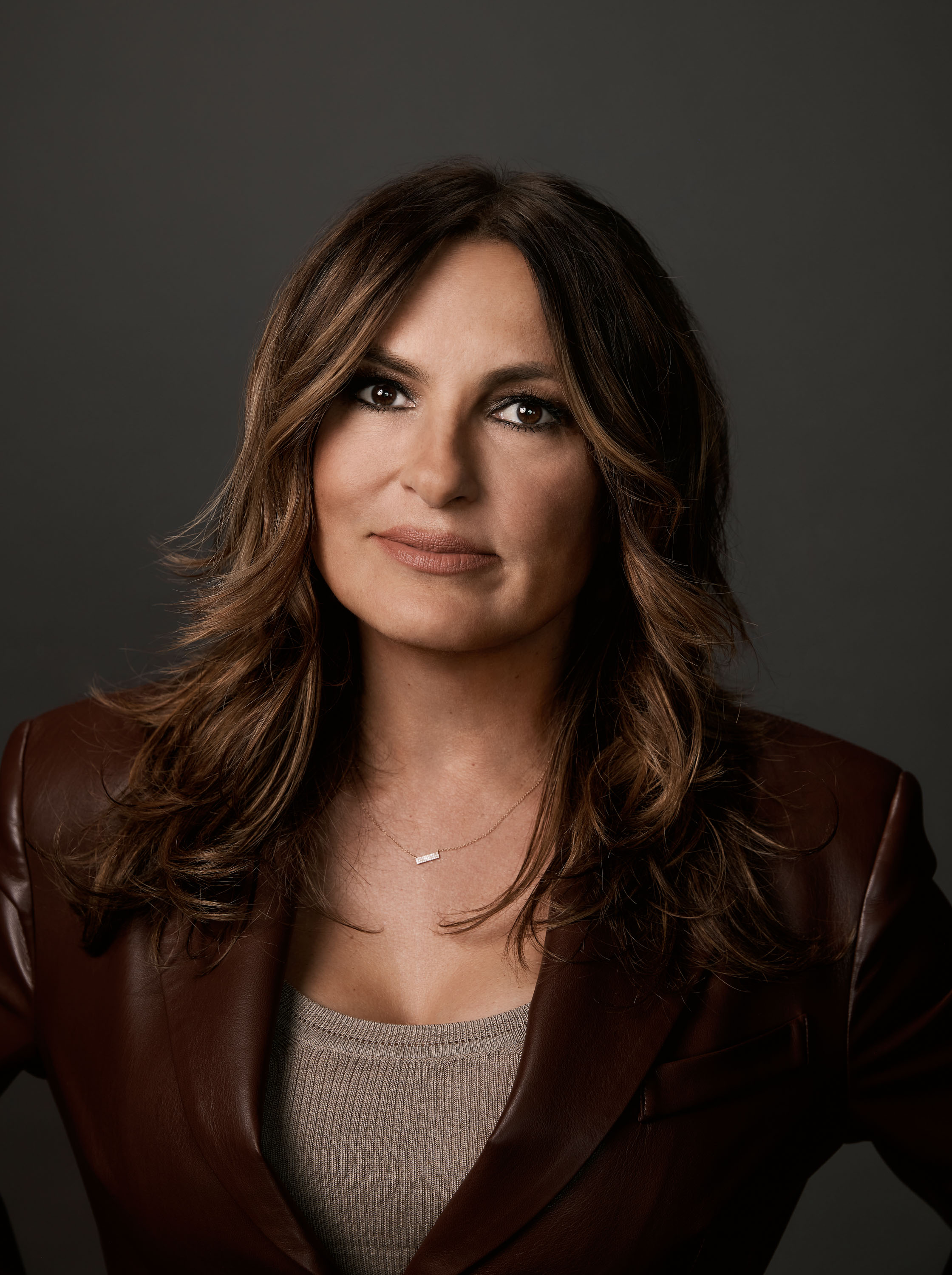
[00:00:04] Mariska Hargitay: Welcome. I'm Mariska Hargitay, and this is Survivor Stories, a podcast of the Joyful Heart Foundation, which I started more than 20 years ago to transform society's response to sexual assault, domestic violence, and child abuse. Thank you for joining us today. Survivor Stories introduces you to some of the remarkable people that we at the Foundation have met over the years. Through interviews with host and longtime board member Debbie Millman, you will hear from these people, some of whom have survived profoundly difficult, painful experiences of violence and gone on to change the world. I hope you find their stories as inspiring and enlightening and motivating as I do.
[00:00:56] Debbie Millman: Please note that this episode contains depictions of sexual abuse and other violence. Please take care of yourself and go to our website, JoyfulHeartFoundation.org to find resources and hotlines if needed.
[00:01:15] Susanna Gibson: Forever and always. People do not view you as human and they feel entitled to your body. They feel entitled to say things to you in the grocery store. They feel entitled forever. And I think it's really disheartening. And that's one of the reasons I started our organization.
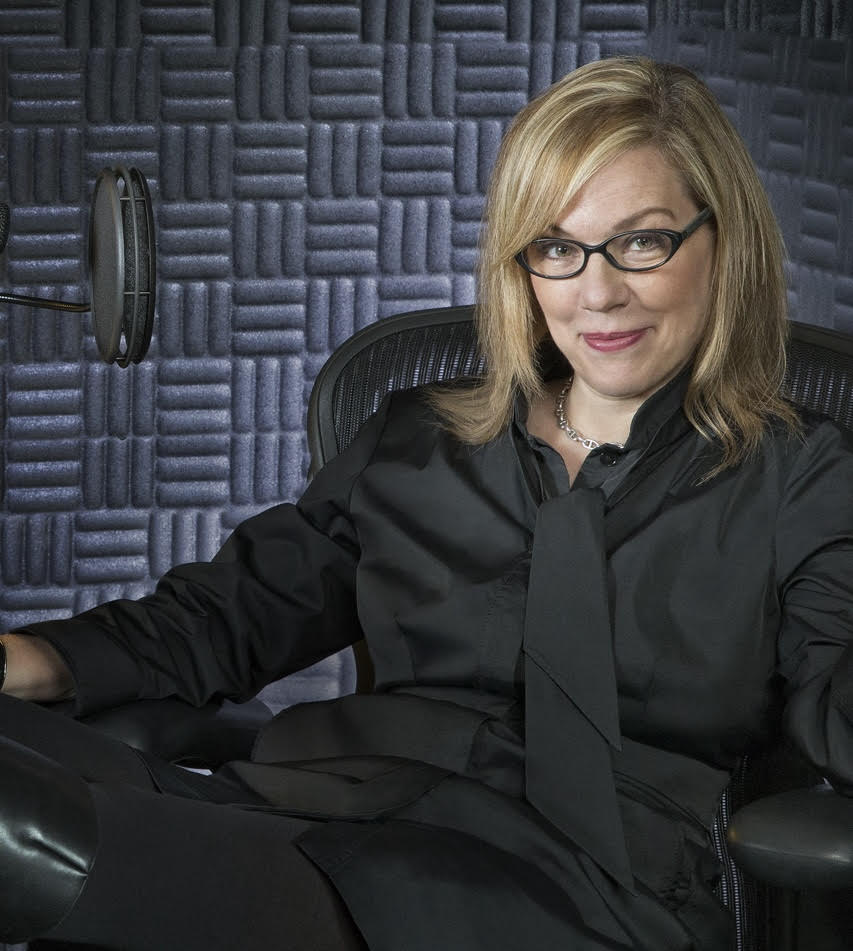
[00:01:34] Debbie Millman: Welcome to Survivor Stories, the podcast of the Joyful Heart Foundation, where we meet the people who are helping reshape society's approach to domestic violence, sexual assault, and child abuse. I'm your host, Debbie Millman, longtime board member of Joyful Heart, working alongside our fearless founder, Mariska Hargitay. Last year, in our first season, we addressed some aspects of what is known as "image-based abuse" by hearing from advocates fighting to end technology-enabled abuse, including Noelle Martin, who, at age 18, discovered her photo had been lifted from social media and superimposed onto explicit material without her consent. Determined to prevent others from suffering similar abuse, she played a pivotal role in getting laws passed to criminalize the distribution of nonconsensual intimate images in her native Australia. What Noelle experienced is just one form of image-based abuse, a term that refers to any nonconsensual creation or distribution of a person's image. The images can be obtained consensually and distributed nonconsensually, obtained nonconsensually, such as with a hidden camera or, as in Noelle's case, they can be artificially created by photoshopping or using artificial intelligence. Image-based abuse also includes sextortion, cyberflashing—that's when someone sends unsolicited or unwanted explicit messages via digital devices—as well as video voyeurism, which involves secretly recording or watching someone in a private or intimate setting without their consent. Since we recorded our conversation with Noelle Martin, we've seen progress in efforts to address image-based abuse, including the passage of the federal Take It Down Act and new state legislation, but there is still so much more to be done to prevent this violence, hold perpetrators accountable, and ensure survivors receive the support and the justice they deserve.
[00:03:52] Debbie Millman: Like Noelle Martin, Susannah Gibson has had her own painful encounter with image-based abuse. In her case, she was running for a seat in the Virginia House of Delegates when her political opponents found and distributed online, without her consent, intimate videos of her and her then-husband. After narrowly losing the election, she went on to found MyOwn Image, a nonprofit organization whose mission is to prevent and strengthen responses to technology-facilitated sexual violence. She joins me today to talk about her experience as a survivor of image-based abuse and her journey into advocacy. Susanna, thank you so much for joining me today. I'd like to start off with your personal history. You were running as the Democratic nominee for the 57th district in the Virginia House of Delegates when you found out that intimate videos of yourself had been illegally recorded and disseminated without your consent. To help our listeners understand the real life impacts of image-based abuse, can you walk us through the moment you discovered these videos had been shared without your consent?
[00:05:13] Susanna Gibson: Yeah. Thank you for the introduction and the intro. Yeah, I was. I'm a nurse practitioner by training and decided to get into politics after having no interest from the large majority of my life. I've always been very passionate about women's healthcare and reproductive health, family planning, access to contraception and abortion. And I decided to run for office back in 2022 for the Virginia 2023 elections after Roe v. Wade was overturned. And I felt like, hey, if the people we elect to the state government are going to be the people that get to decide, my daughter and my neighbors and my community's access to abortion, we need a healthcare provider in that state legislature who knows what they're talking about. And I was living in the suburbs. I have two young kids, and I've always been very active in the community and decided, hey, I can win that seat. You know, I'm a suburban mom. I'm a healthcare provider. So I decided to get involved and start running. And it was an open seat. There was no incumbent. Virginia had redistricted but hadn't had state elections yet, so it was heavily targeted, and was doing very well, had won a primary fairly easily, and it was about two months before the election. It was September 7th, actually, of 2023. And one of my consultants, who was a long time Virginia consultant, started reaching out to me. I was in clinic seeing patients and he said, hey, there's this reporter who wants your number. And I thought, okay, just give it to her, I don't care.
[00:06:55] Susanna Gibson: That's fine. He said, no, no, I want to know what she wants before I give it to you. I. There's something weird. I was like, okay, I'm seeing patients. Like, I don't have time for this. Like, let me, you know. Fine. And he texted me and it was in the afternoon. It was a really beautiful day. And he said, hey, I really need. I found out what she wants me. You need to call me. And so I stepped outside of the clinic in between patients and thinking, there's nothing like, okay, there can't be anything that bad. And he said, they have videos of you having sex with your husband and I. I mean, at first I was a little confused and trying to figure this out and had to go back in to see patients. And so the whole time in between patients, I'm googling, is this legal? Did someone record me? Trying to figure out, like, if what was happening, where I thought these images had come from, was actually happening? And was that legal? And I had about two hours left in clinic seeing patients. It was probably the most excruciating two hours of my life, knowing that I was sitting there trying to help patients and kind of trapped and also not understanding what was going on, and just that there were sexually explicit images of me being passed around. Yeah, I was okay. Yeah. I guess the best way to describe it was like just complete disbelief that that was happening.
[00:08:24] Debbie Millman: What was it like navigating your campaign and personal life while you were dealing with this serious violation of privacy? What challenges did you face in the time that followed?
[00:08:37] Susanna Gibson: I'm not going to lie, it was pretty horrific. We spent about two days arguing back and forth with the Washington Post saying, hey, you can't write a story about this. You have an internal policy saying that you do not identify the victims of sex crimes. This is a sex crime. Like, how can you possibly be insisting on doing this? And I think if I hadn't been a candidate for office, they would have been horrified by the invasion of privacy and the sexual violence that we know that IBSA is. And but because I was a candidate for public office, they felt justified in writing that. And I think that was kind of my experience throughout the rest of the campaign and the rest of the two months. It kind of had blown up in the media for about two weeks, and it was on CNN repeatedly, and it was on NBC and ABC. And you're just thinking to yourself, as a human being, I don't understand why this is a news story. I don't understand why sexual violence like this—why I don't have a choice. Right. Like, this is something that happened to me that is deeply personal. I couldn't eat, I couldn't drink. To find out that you've been the victim of something like this, and then know that it's going to get distributed on a mass scale is absolutely horrific.
[00:09:56] Susanna Gibson: I can't even put it into words. And I think what was also particularly hard for me running for office then, was that every single male member of the Virginia General Assembly had passed around these images. And, you know, not thinking anything of it, my state Senator, who was a Delegate running for state Senate and I was in a nested district, we spoke the night before the article came out, and I'm just beside myself sobbing and saying, you know, I didn't know that these images had ever been recorded. I can't believe this is happening. And then a few days later, he said, well, I watched your videos and I don't believe you didn't know you were being recorded and then proceeded to bar me from coming into the office, proceeded to bar door knockers from knocking for both of us at the same time. I mean, the way that women are treated when these crimes occur. It really opened my eyes to the amount of victim blaming and shaming and to how women are treated. And it's not just because I was running for office. This is exactly what happens to victims of what we call nonconsensual distribution of intimate images, or NDII for short, and image-based abuse, or IBSA, image-based sexual abuse.
[00:11:15] Debbie Millman: There are other women running for office who've also had to deal with image-based abuse, including Katie Hill, a former congresswoman from California who resigned when opponents published nude photos of her taken by a vindictive ex. What has your journey taught you about the challenges women in politics face?
[00:11:36] Susanna Gibson: Yeah, Congresswoman Katie Hill actually is fantastic. She had reached out to me the same night that that article came out. I think Katie had this personal, very visceral reaction to what was happening to me, having experienced it. You know, people were calling for me to drop out and really pushing for me to to leave the race. And the timing of them dumping that out was not a coincidence. They had had that apparently since January and it came out in September. So the timing was purposeful. They wanted to make sure I could not drop out, but I remember one of my consultants saying, I just want to make sure you understand. I'm not saying you should drop out, but it's going to be a lot less painful if you do. And I just want to make sure you understand what's about to happen when you run for office. It doesn't matter that I never wanted to be in politics. You know, it doesn't matter that I'm a nurse practitioner. It doesn't matter that I have two kids. It doesn't matter that I am a soccer mom, right? Like it doesn't. None of that matters when you decide to put yourself out there. Forever and always, people do not view you as human and they feel entitled to your body. They feel entitled to say things to you in the grocery store. They feel entitled forever. And I think it's really disheartening. And that's one of the reasons I started our organization, is because I had women from throughout the country reach out to me and say, hey, I'm running for office, or hey, I was thinking about running for office and I watched what happened to you. And I don't want to I'm I'm terrified that that same thing is going to happen to me. And I think we really have to think about as a society and as a culture when we treat women in the public eye like this.
[00:13:25] Debbie Millman: I believe that you lost by about 700 votes. So there's absolutely no question you would have won had this not happened. It's common for survivors of image-based abuse to feel traumatized, powerless. Can you talk about the healing process? What steps did you take to reclaim your sense of agency?
[00:13:49] Susanna Gibson: You know, I'm always and forever going and finding videos and trying to pull them down and filing DMCA takedown requests. But I would say getting someone to help you professionally that you can trust is probably one of the best things if in terms of healing and mental health, that you can do. I was very lucky I had someone reach out to help me and does work for for victims of NDII and CSAM, child sexual abuse material. Does work, pulling their images down pro bono and is one of the best in the world at it. And he has been kind of my guardian angel and has really helped me because it's very triggering going to these sites and watching these images and videos and having to file takedown request for every individual link. It's very, very, very triggering. So getting professional help to doing that if you can, is by far the best thing. I'd say for anyone who's out there listening too, if that is happening to you, please let me know and reach out. And I'm happy to connect you to people that we trust to do that, because there are a lot of bad actors out there who will take people's money and not do what they say they're going to do. And that's also really that's revictimizing, right. A victim who really needs your help. So please feel free to reach out and I'm happy to help.
[00:15:06] Debbie Millman: How can people reach out? Where can they find you?
[00:15:09] Susanna Gibson: You can either email me. Probably the best way Susanna@MyOwnImage.org. Or you can reach out to info@MyOwnImage.org and I personally check both of those.
[00:15:21] Debbie Millman: Thank you for offering that.
[00:15:22] Susanna Gibson: Yeah, I mean, so the best thing, the most healing thing for me has been to help other people. And so when people reach out, connecting them with people who can do work for them, that we trust, that we've vetted, that have personally helped me pro bono, and being able to see what that does for survivors to have the appropriate kind of support is, again, by far the most healing thing, I think.
[00:15:55] Debbie Millman: You've described this experience as something that has fundamentally changed you as a person. I can't even imagine how it couldn't. How did you channel this experience into finding the courage to become an advocate?
[00:16:15] Susanna Gibson: You don't have a choice, right? Like you play the hand in life that you're dealt. You know, I have two kids and I know what's right and wrong. I have a very strong moral compass and always have. I think it's one of the reasons I love healthcare so much. I love helping other people. And I think having gotten reach out from people throughout the country and people who are looking to me for guidance, even though I didn't know what I was doing, I was just fresh off of an election and having people say nasty things to me in the grocery store and in the gym, and I didn't know what to do. But getting that reach out from people and just putting one foot in front of another and trying to help them in the minimal ways I even could or knew how to, I think, is one of the things that gave me a lot of courage and strength to continue moving forward and to want to get into this space. But just personally being able to get up every day, it's because of the people that have reached out, either encouragingly or people who really are just looking for someone else who's experienced what they have.
[00:17:24] Debbie Millman: Let's talk about your organization, MyOwn Image. I imagine that in addition to all the courage it took to start this, I'm hoping that it felt empowering also, to start an organization that advocates for people who've experienced what you've experienced. How did you go about creating the foundation?
[00:17:47] Susanna Gibson: I knew how horrific having your images viewed, shared, distributed without your consent was. And I was just blown away that this was not a federal crime. And so I started looking at why is it not a federal crime? And what was going on with the previous bills that had been introduced. And a lot of it was concern over how our new laws, and new felonies in particular, are going to be used disproportionately to target and harm marginalized communities or already over-policed communities. Knowing that, and having become involved in politics, I now have these connections. And you don't often see victim advocates and criminal justice reform advocates working together and really collaborating in that way. And if that's the holdup, well, let's go like, let's figure it out. And we decided, okay, even if Take It Down passes, are federal prosecutors actually going to take the time to prosecute these crimes? We know they're already overworked and under-resourced, and so, they're likely not. Even a case like mine, as big as mine became, was probably not be prosecuted by a federal prosecutor. It's still going to fall to the states and to Commonwealth's attorney's offices to hold people accountable. And so with these state laws, every state is a little bit different.
[00:19:13] Susanna Gibson: South Carolina was the only state in the country without a law criminalizing NDII. And so that was kind of my big whale, like what I wanted to go after. And was lucky I met people throughout the campaign who do work across the country in different states and reached out and was able to get connected with South Carolina legislators and the Assistant Attorney General, Matt Gates. And they were thrilled to work with us. And they thought it was high time that South Carolina stopped being the last state and was able to essentially get our model policy introduced and passed as their state law. And we also did work in Arkansas, Florida, New Jersey, New York. But I'll give you an example about why state laws are so important. In some states, in order to be convicted of a crime, in order to have committed a crime of NDII, you have to be a former or current sexual partner or family member. And so that's one of the things we worked on in Arkansas last year and want to work on in Pennsylvania. Why is it that only a current or former sexual partner can commit this crime? Right? What about a neighbor or a coworker?
[00:20:25] Debbie Millman: Anyone? Yeah. Absolutely.
[00:20:28] Susanna Gibson: Correct. And so that's the kind of work we do is we go state-to-state and amend things like that. We also do a lot of work around intent, because the intent component is a huge barrier for victims getting any kind of recourse as well.
[00:20:44] Debbie Millman: I can't imagine what intent would be considered okay. You know, I mean, this all seems to be horrific and and should be illegal. I don't see any loopholes.
[00:20:58] Susanna Gibson: Yeah. And that's right. And that's kind of where I go with it as well. My knee-jerk reaction is, well, anytime someone doesn't consent, this is sexual abuse. That's it. Right. The only criteria, the only intent should be to distribute it without my consent. But my board members say, well, what about, let's say, an 18 year old boy who sends three of his friends a picture of his girlfriend? And you know, he's not trying to cause harm. He's just trying to say, hey, look how hot my girlfriend is. And it doesn't go farther than that. And I say, well, what about that girl? Right. She didn't consent to that. But to their point, I think it's a good one. Does that 18 year old boy deserve to be felonized? And is that the same level of severity and damage as someone who says, hey, I want to win that election, or hey, I hate trans women and posting a picture of a trans woman online without that person's consent, with the intent to malign them or embarrass them or destroy their reputation. And so I think there are subtle nuances to these crimes when we're talking about sentencing structures. It's important to think about and address.
[00:22:07] Debbie Millman: So much of our lives these days unfold online with so many different kinds of details about ourselves in public view. There's no question, at least from my perspective, that a young man, however old he may or may not be, sending pictures of his hot, so to speak, girlfriend to his friends is a violation of privacy. It feels like it is illegal in addition to just inappropriate. How has this complicated people's understanding of what consent means? And how do we think about privacy in these regards?
[00:22:45] Susanna Gibson: Well, I think people in society don't understand that how horrific this is. And I think one of the things we try and do too, is a lot of public education on that. I'm a nurse practitioner. I was a very good nurse practitioner. I've been doing it forever, was very much like beloved by my patients. I was at a small family owned practice doing obesity medicine. And I lost my job when that happened. And in Virginia, because of right to work, you can be let go from your job for any reason. And their only reasoning they gave me was we're concerned about our reputation, which is interesting because all of my patients were reaching out. They have been some of my strongest defenders, including the Republican patients, like they would reach out and be like, you are the best healthcare provider. You know, you're the only person that's ever, like, sat down and taken your time with us and made us feel seen and heard. But unfortunately, people don't understand the trauma that comes with this. Like we know with victims of IBSA, 90% of victims have severe mental health impacts. So depression, anxiety, PTSD, 50%— this is what I found particularly alarming—is that 50% half of victims contemplate suicide. Oh, half of victims. It's it's not simply that people are embarrassed or humiliated. The mental health impacts are the same as physical sexual assault. That's what multiple studies have shown. And society doesn't understand that. I've had people say, wait, you lost your job? Or wait, you're afraid to go to the grocery store? Or why are you paying attention to the cars driving by your house like you are now, right? Like, because I'm terrified.
[00:24:40] Susanna Gibson: Just like someone who was physically sexually assaulted in their home is, right. Like, we know that about 59% of the time that people's images are scattered around online or distributed online without their consent. About 59% of the time they're passed around and distributed, with the victim's identifying information in them. So names, addresses, phone numbers, places of employment, where they go to school. And what that naturally leads to is that about 60% of victims are stalked online and 40% are stalked offline. So in person or via the telephone. People don't understand. I think there's a lack of understanding and acknowledgement that our online lives are very much intertwined with our offline, in-person lives, and we cannot continue to pretend like they're not. These crimes drive largely women, but not just women, off of platforms that are vital now for their career and academic success, like LinkedIn or Facebook or some of these other platforms. You remove yourself because you don't want to continue to be abused and harassed when you go online, and it's having a big impact on who participates in higher education, who seeks public office, not just elected office, but who wants to serve their communities and has a big impact on our democracy.
[00:26:10] Debbie Millman: What role do you think tech companies have in preventing image-based abuse and protecting survivors once their images have been shared without their consent?
[00:26:21] Susanna Gibson: I think there need to be guardrails in place. One of the things that was really eye opening to me, when you look at these kind of user-uploaded pornography sites or pirate sites, these are sites where users can upload whatever they want and there's no consent verification required on them. There's no verification that something was created consensually and no verification requirement that they're being uploaded consensually. And so I think that that's really important. I think any time you're talking about technology, though, as technology evolves, so do the ways that we find to harm each other. And so I think with tech companies and platforms, they need to be building in common sense guardrails to these things. When Pornhub was forced back in 2020 to remove all material off of their site, that was either unverified to be consensually created and uploaded, or was not child sexual abuse material, they had to remove 80% of their content overnight. 80%. Okay. So 20% of their content is what was verifiably created and put there with consent, or of someone who was over the age of 18. So I think building in like consent verification is going to be important. But also, you know, the website that originally kind of recorded me and then uploaded it. They're based in Thailand and Vietnam. So the company's registered to two people, one in Thailand, one in Vietnam. So what can we do? Right. So tech companies can only do I think, but so much, as difficult and possibly controversial as that is, you know, a lot of survivor advocates talk about holding tech platforms accountable.
[00:28:09] Susanna Gibson: And yeah, I think they should be held accountable for putting common sense guardrails in place. I think technology is going to continue to evolve, and so putting any specific mandated requirements on the tech companies is likely not going to turn out to be what people think it's going to be. I think societal education about this is sexual abuse is going to be more impactful or just as impactful. You know, I remember like growing up, hearing a lot about women getting sexually assaulted, walking home from bars at night like college-age women. And again, this was back in the 90s, but it was kind of like, well, of course she gets sexually assaulted. She was walking home from a bar wearing a short skirt alone. Yeah. And that's kind of what you see. It's like, well, how dare you send someone a sexually explicit image? Or don't you know that anything you send can be sent? And it's very much the same thing, if you take a step back and think about it. It's just the modern digital equivalent of saying that of course that image is going to get out there. You deserve to be assaulted. You knew you were probably going to be assaulted, you should have known you're going to be assaulted. And it's just not right. So I think educating each other and having these conversations and dialogues, I think, is truly going to be more impactful than putting specific mandated requirements that are not just easy, common sense requirements for platforms and tech companies.
[00:29:46] Debbie Millman: The Take It Down Act became the law of the land. Can you briefly explain what the law does and why state level laws remain so crucial, particularly when it comes to addressing image-based abuse?
[00:30:02] Susanna Gibson: Yeah. So I think the most important distinction between Take It Down and what state level policies do is Take It Down. It criminalizes it. It felonizes the nonconsensual distribution of intimate images. What it also does is it requires platforms, tech platforms, to remove nonconsensual intimate images within 48 hours of being notified that it is nonconsensual. State laws don't do that. States don't really have that kind of power in terms of fining tech companies. So that's one of the important distinctions is that it has that 48 hour takedown requirement, which is important. I very rarely post on X anymore because often when I do, if I accidentally leave the comments on, people start putting images of me up online like sexually explicit images taking screenshots from these illegal recordings. And so I don't often post on there, partially for that reason, and also partially just because people are just horrible to each other. I don't get much good out of it. One tweet had 5.6 million views of me that someone put up an image of me. Because of that, I've kind of lost my ability, I believe, in X's eyes to have any kind of ownership or claim over that image. And so it's been particularly difficult with X to say, hey, this is nonconsensual content of me. And they say, well, nope, sorry, but now with Take It Down, hopefully, it gives it a little bit more teeth because right now they're not required to remove that because of Section 230. So Section 230 of the 1996 Communications Decency Act gave platforms the ability to kind of evade accountability and responsibility for content that their users post.
[00:31:54] Debbie Millman: How? Why? How is that possible?
[00:31:57] Susanna Gibson: So it was 1996. The internet was just becoming a thing. I think it was a lack of foresight and understanding into what technology is going to evolve to and what capabilities technology could and will have. You know, I think originally, they meant it to kind of foster free speech and foster creativity online, but it accidentally gave these platforms this loophole.
[00:32:25] Debbie Millman: Do you think that that'll be changed? I mean, how is this something that's still legal?
[00:32:31] Susanna Gibson: There's a lot of talk about responsible amendments to Section 230. A lot of talk. And it's going to be interesting. And I would actually anticipate there will be some kind of court case brought fairly soon after Take It Down goes into effect, that kind of challenges Take It Down and that 48 hour requirement and pushes back on that with Section 230. So I think it's going to be a subject that we're going to see coming up in the next year or two. But as of right now, they don't have to remove it. So that's one of the really important things that Take It Down does. Now they have to or else they can be fined.
[00:33:07] Debbie Millman: So I'm wondering what are some common misconceptions about image-based abuse you've had to address while working with lawmakers?
[00:33:16] Susanna Gibson: You know, it's actually been the easiest request. It has not been hard at all to find lawmakers who want to take this on. I will say maybe one of the challenges I've and they're not even that big of challenges, but I've watched this good victim versus bad victim dichotomy. You know, with the AI generated deepfakes, these victims didn't do anything wrong. Someone took their image and likeness and created intimate images of them and put them up. That's horrific. And it is, by the way. The mental health and psychological impact on victims of deepfake sexual abuse and real or authentically created sexual abuse is the same as what a lot of the studies have shown. And you saw this rash of state level legislation introduced over the past two years to address AI sexual explicit deepfakes. Like Pennsylvania did, but they left out amending the rest of their code section. That is more important, and I'll get to why it's more important in a second. But because tech is the sexy thing to talk about and do, and those are good victims. You're a bad victim if you took an image and sent it to a partner or partners or anything that makes you a bad victim, somewhat deserving of that abuse.
[00:34:34] Susanna Gibson: And so that's one of the things I've been a bit concerned about and watched throughout the evolution of the past few years legislatively, because everyone wants to address deepfakes. So doing some education with lawmakers on that, I think is important. If you look at a lot of the state laws, deepfakes are already covered under their laws. It's just not specifically written in. A lot of these state laws, they don't say it has to be an authentically created image or a deepfake or a machine learning generated image. It's a sexually explicit image or recording is what the current law is. Deepfakes are already captured under the large majority of the state laws. I think sometimes you see legislators doing performative bills, and I think a lot of those deepfake bills are. So trying to do education with lawmakers that, hey, that's great that you added in Pennsylvania. That's great. You added in machine learning and deepfakes to your legislation. Good for you. But you still have to be a current or former sexual partner to be convicted of this crime. So you're not actually moving the needle much because those images in Pennsylvania were already illegal. You're not addressing what the real barriers to victims getting access to justice are.
[00:35:47] Debbie Millman: Are there other challenges that remain in ensuring survivors of image-based abuse receive justice?
[00:35:54] Susanna Gibson: Yeah. So I'll give you a really good example. So one of the reasons we're working in Pennsylvania is because there's a nurse in Pennsylvania who I've become close with. We were connected pretty soon after my election. Her husband for years had been taking images of her, videos of her, pictures of her that she knew he was taking. She thought it was for his use only, and did not think that these images were going to go elsewhere. Well, turns out for years, he was uploading them to different websites like Reddit and some of these other not just porn sites, but other user uploaded sites pretending to be her and having kind of these relationships and conversations with other people. He was doing it for his own sexual gratification. He wasn't doing it with the intent to humiliate, harass or coerce her, I believe, is Pennsylvania's current intent. He was doing it for his own sexual gratification, but he was not intending to humiliate her or harass her. So it's not a crime. And she went to her local law enforcement. She worked with the Commonwealth Attorney's Office where she lives. She took it all the way up to the Attorney General's office in Pennsylvania. She was a great advocate for herself, and every step along the way, she was told by all of these different levels of law enforcement and prosecutors that there was nothing that she could do because his intent was not that. And I think.
[00:37:21] Debbie Millman: Goodness.
[00:37:22] Susanna Gibson: Yeah, yeah, yeah. That's right. So that's a very easy example of the kind of things that victims face when they're trying to get any kind of justice. By the time we pulled her images off for her, there were over 800 different links and images. Okay. She has had extreme PTSD. She had to take a step back from her job to try and work on her mental health. I mean, it has economic impacts on victims. I mean, I didn't work for a year. Right. And I've had attorneys fees and all that. There's an economic impact to victims as well that also needs to be addressed and understood. But her situation happens all the time. And that's why is a federal prosecutor in Pennsylvania going to take on a nurse in the small town of Pennsylvania's case? No, they're not, they're busy doing a lot of other things that, honestly, they should be doing and addressing that are not really up to local law enforcement to do. It's kind of out of their hands. What local law enforcement should be doing is helping the people that live in their communities.
[00:38:29] Debbie Millman: Is this something that you are going to address next in your advocacy?
[00:38:34] Susanna Gibson: Yes. So it's interesting. I'm still working as a nurse practitioner. I'm going through a pretty contentious divorce. I'm a single mom for the most part, and so we're doing a lot of this work through our organization. We don't have funding. A lot of, unfortunately, you guys know as well, a lot of the federal grants trying to fund any kind of sexual or domestic violence organizations have gotten just decimated. And so we do our work largely unfunded just because it's that important to us. And so what we can do without funding and what we do very well without funding is change state laws. I'm happy to lobby my two board members, also. They're lobbyists. That's what they do. They're policy experts. And so we do it just because it's that important to us. One of the things that I talk about would actually be important. There was a Department of Health and Human Services last December, December of 2024. There was a listening session on IBSA, and a lot of survivors came and spoke about what they thought was going to be the most impactful and where they thought funding should go. This is before everything got slashed. And one of the things that I talked about and really emphasized was that we need training specifically for law enforcement, and we need training specifically for prosecutor's offices, just like we have in special victims units or people who are specifically trauma informed and trauma trained on that, on sexual assault. I think we really need to have some kind of specific training and ensure that there's at least one person in every prosecutor's office, there's at least one person in every law enforcement office who is specifically trained on this.
[00:40:18] Susanna Gibson: I've had two very different experiences with law enforcement, one working with someone in Montana. There's a man who basically has a go file drive of over 2000 women and their images. Some of these women are deceased, and he posts their naked pictures next to their obituaries on his go file. It's horrific. I thought I found him. I thought he lived in a very small town, and I called their local law enforcement and I said, hey, this is who I am. This is what I think is going on. This is why I think it is. And got a call back from one of the police officers after I kind of said what was going on. It was a man sounded about my age, so probably 30. And I kind of initially was like, oh, he's not going to understand like he, it was the most validating experience I've had with a law enforcement officer. He listened to me. He took me very seriously. He asked the questions that he needed to ask in a very trauma informed way that was not victim blaming. It was supportive and kind. He made it a priority. He went to that person's house within a few hours, had called me back, like he could not have been better. And it was not that man, unfortunately, he's still out there somewhere. But I felt very seen, and I felt like the abuse and trauma that I had and was continuing to experience was being taken seriously. And then, in contrast, there's a man who lives in Tennessee who's, again, one of those vile humans that distributes images of various women and harasses and abuses them online and had been distributing my images. And I called the Tennessee law enforcement and was passed to a female police officer who immediately was, well, how did he get these images of you? How do you know he's posting them? Where are they posting them? Wait, why did you give him an image? I'm like, I didn't give an image. Well, then where did he get it? Why would you do that? And finally, I just hung up. I was like, this is just. And I'm just bawling, feeling again, like, just revictimized. And it gives victims this sense of hopelessness and that everything you're experiencing is not valid or worthy. You're charged with protecting people when you're in law enforcement and when victims come to you, especially of sexual abuse, it can be one bad experience like that with law enforcement can turn someone away from ever trying to get any kind of justice or recourse again, because they don't want to be made to feel like that again and again and again. So I think doing education for law enforcement and prosecutors is really important. Unfortunately, it takes a lot of money.
[00:43:15] Debbie Millman: Well, thank you for being such a warrior and being so candid about this. What progress gives you hope and drives your advocacy?
[00:43:24] Susanna Gibson: Well, I love being able to make connections with people. I mean, I've met some of the best people that I likely never would have had the opportunity to meet when I was running for office. And same thing in this advocacy space, in the advocacy world. I doubt if what had happened had happened to me, I would be ever have connected with Joyful Heart and we do a lot of work with you guys. You guys have been very supportive of a lot of our state laws when we're trying to change them. It's been really helpful. And so being able to partner with some other sexual and domestic violence orgs who do work in this space so that we can kind of expand the impact our work is able to have. So I think things that are bringing me hope and I see evolving are a lot of the sexual and domestic violence orgs starting to focus on image-based abuse and make it a priority. So I think we're stronger together, and the more of us that can be on board and kind of support and amplify the work that the others are doing, the more of an impact we're going to be able to have in a louder voice.
[00:44:25] Susanna Gibson: People are slowly starting to understand that this is sexual abuse. I think as generations like my kid, I have an almost 12 year old. They've grown up with technology in their hands. We started getting the internet when I was like late high school, and so still, I'm not nearly as tech savvy as my son. And so I think as these generations who grow up with technology understand what privacy is in terms of technology in the digital world, I think it was 2.7% of adults had taken or shared an intimate image in the year 2000. And then in 2023, it's like 88% or 89% of American adults had taken or shared an intimate image. And so it's becoming understood as something that's much more commonplace, that it's not this abnormal sexual behavior. And so with that becoming more commonplace, I do see these younger generations being much more horrified about what happened to me and that it shouldn't have happened.
[00:45:32] Debbie Millman: They can also envision that it could happen to anyone, including themselves.
[00:45:37] Susanna Gibson: That's right. Whereas if you never grew up with that, it's a bit more of a foreign concept. You know, it's not that they're necessarily trying to be judgmental. They I think it's just not something that's ever come up and that they've never done. And so it's hard for them to think that they ever would. So those things give me hope.
[00:45:55] Debbie Millman: If people want to find out more about your work and MyOwn Image, tell us where they can go.
[00:46:02] Susanna Gibson: So our website is MyOwnImage.org. And on there, you can see our state policy, our model policy. We really focus specifically on understanding and knowing different state level laws. So if people are having questions, if you live in Idaho or Wyoming or Florida or wherever, and this is happening to you or to someone else that you love or care about, like please feel free to reach out. If you're wondering if something is legal, if what the intent requirement is, do they have to have, a lot of them, also reasonable expectation of privacy. Any of those things if you need, help them with image removal as well. Please reach out. We can connect you to an organization that does it pro bono for survivors. Even if it's not something that we specifically do, we will be able to tell you who does do it and who we trust to do it.
[00:46:54] Debbie Millman: Susannah Gibson, thank you so much for your advocacy against image-based abuse. And thank you for taking the time to talk with me today on Survivor Stories, the podcast of the Joyful Heart Foundation.
[00:47:08] Susanna Gibson: Thank you for having me. It was such a pleasure.
[00:47:10] Debbie Millman: Absolutely. I'm Debbie Millman, your host, and I want to thank you for joining us today. For more information or to support the work of Joyful Heart, please visit JoyfulHeartFoundation.org. And don't forget to subscribe to the show, leave a review, and please share with your friends. Be well and thank you for listening.