Episode Transcript
[00:00:04] Mariska Hargitay: Welcome. I'm Mariska Hargitay, and this is Survivor Stories, a podcast of the Joyful Heart Foundation, which I started more than 20 years ago to transform society's response to sexual assault, domestic violence, and child abuse. Thank you for joining us today. Survivor Stories introduces you to some of the remarkable people that we at the Foundation have met over the years. Through interviews with host and longtime board member Debbie Millman, you will hear from these people, some of whom have survived profoundly difficult, painful experiences of violence and gone on to change the world. I hope you find their stories as inspiring and enlightening and motivating as I do.
[00:00:56] Debbie Millman: Please note that this episode contains depictions of sexual abuse and other violence. Please take care of yourself and go to our website, JoyfulHeartFoundation.org to find resources and hotlines if needed.
[00:01:14] Anna McAdams: The more that these schools will and these parents will not be afraid, they use the Take It Down act, I think it will start prohibiting other students from doing it. They're going to realize, you know what, I could get jail time for doing this.
[00:01:25] Elliston Berry: A massive social media app like Instagram or Snapchat, they are responsible for taking down all nonconsensual explicit images within 48 hours.
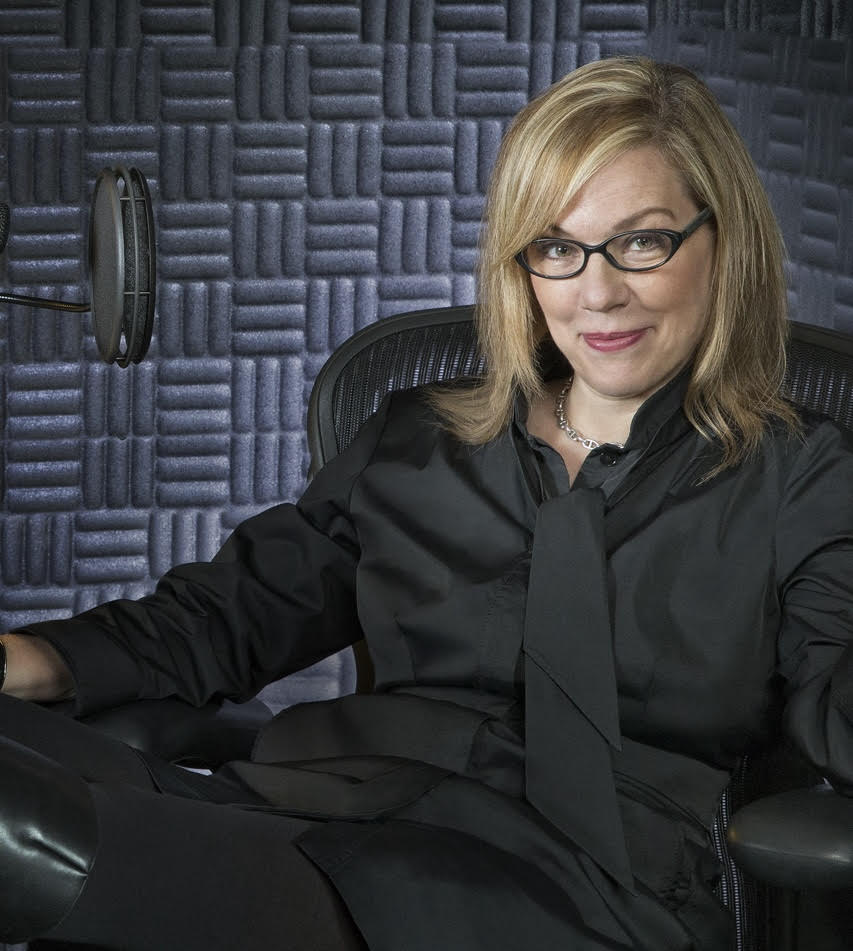
[00:01:37] Debbie Millman: Welcome to Survivor Stories, the podcast of the Joyful Heart Foundation, where we meet the people who are helping to reshape society's approach to domestic violence, sexual assault and child abuse. I'm your host, Debbie Millman, longtime board member of Joyful Heart, working alongside our fearless founder Mariska Hargitay. In today's episode, we're going to take another look at image-based abuse, but from a different perspective. The perspective of a teenager. In past episodes, we've heard from adult survivor-advocates Noelle Martin and Susanna Gibson, both of whom had painful encounters with image-based abuse. The violations of privacy in their cases were traumatic and had very real consequences on their lives. Now, imagine being a 14 year old and you discover realistic but completely fake naked images of yourself being distributed by anonymous accounts on Snapchat. Remember what it felt like to be a teen? How much your image and reputation and sense of belonging mattered? Traumatizing deepfakes like these can be spread instantly and widely. They are not only profound violations of privacy and dignity, but they can fuel rejection and bullying. They can damage a person's perception of themselves and their body. They can affect their ability to trust others and have healthy relationships. And they can cause lasting harm to someone's mental and physical well-being. Shame and trauma from violations of privacy like this can be incredibly painful and intense for adults. But what if you're a young woman who hasn't yet developed all of the cognitive and emotional tools that come later with more life experience and developmental maturity? An important aspect of the dramatic rise in image-based abuse of children is that many of these instances are peer-on-peer.
[00:03:54] Debbie Millman: In other words, it's kids targeting other kids. Cyberbullying has long been a concern, but new AI technology has made it far easier to carry out and disseminate. A 2023 survey found that 1 in 17 kids have been a target of deepfake imagery. Maybe, at first glance, that number might sound small, but put it in another perspective. That's roughly one student in every classroom. And those numbers are already two years old. As AI advances every day by leaps and bounds, so does the capacity for young people to be abused. Increasingly, schools have become the front line for these harms, but many struggle to respond in ways that protect and support students. Today, I'm joined by Elliston Berry, a teenage survivor of image-based abuse, and her mother, Anna McAdams. This mother-daughter duo has been at the forefront of advocating for the federal Take It Down Act, and are here today to talk about how image-based abuse is impacting children and teenagers, and how schools are handling or, failing to handle, these cases. Elliston and Anna, thank you so much for joining us today.
[00:05:26] Anna McAdams: Thank you. Thank you for having us.
[00:05:28] Debbie Millman: Oh, absolutely. Elliston, I'd like to take a moment to talk about your personal story. This isn't an easy story to share. We're so grateful for your willingness to be vulnerable with us. In 2023, you were a 14 year old freshman in high school when you found out that there were fake, explicit images of you being shared without your consent. If you can, can you please walk us through the morning you discovered these images and how you found out and how you reacted?
[00:06:08] Elliston Berry: Yeah, of course. I woke up on a Monday morning with messages from one of my best friends. She had sent me a collage of pictures, two normal photos, one of her, and then a normal photo of me, and then two AI nude images, one of her and one of me. She sent me this collage ultimately to illustrate that these images were taken from this original picture, just to kind of further prove that this isn't real. I had no idea what to say. It was so hard to even look at these photos, and I had so many thoughts that went through my head. I mean, the first thing I wanted to do was just say, that's not real. What is this? Get this out of my face. I don't want to see this. I don't want to deal with this. I have so many other things on my mind that I need to be dealing with. And then my heart dropped to my toes and I was just. I was so shocked and scared. I had no idea where these photos came from. I had no idea who created them. I had no idea who had seen them.
[00:07:02] Elliston Berry: And my parents had always told me, do not send explicit images of yourself. That'll be on your cloud. That'll be on your device forever. I did not consent to this. These aren't even real. I really thought that my future was ruined. I just broke down in tears. I mean, I went to my mom. It was six in the morning and I was just crying to her. I was too scared. I was honestly ashamed to even talk to her, because I didn't want her to think that these were real. I had so many thoughts going through my head. I was trying to get ahold of my friend. I was trying to get ahold of her parents, and then I had to go to volleyball practice and pretend like everything was okay. My performance and practice suffered. I ultimately had to go to school in my second period trying to get this out of my head. But my mom, she is a powerhouse. So by 10 a.m., she was already up in the office, and I was called out of my class to go and talk to a police officer.
[00:07:54] Debbie Millman: Well, it's a real testament to the strength of your relationship that you were able to be completely transparent with your mom. Go to her for help. That's a really big thing. Anna, it must have been incredibly upsetting as a parent to see Elliston have to find this and deal with this. Can you tell us about what you were thinking and feeling and what your immediate response was?
[00:08:19] Anna McAdams: Well, immediately I knew something was wrong because she was so upset. And, you know, as a parent, you never want to see your kid breaking down and crying like that. Never in a million years did I ever imagine that this would be what she's dealing with at that moment. And she shows me these pictures and I'm just horrified. It's so completely realistic. And so, you know, I mean, we're just hugging on her. I'm like, I didn't know exactly what to do. You know, as a parent, I kind of pride myself in thinking I've kind of got everything mapped out, you know? And life might not be exactly like that, but I can handle whatever comes my way. And this was definitely something that we never prepared for, and I never even knew it was a thing. So the only thing I knew to do was, hey, you go to volleyball because you've got a game and have to be there, and I'm going to the office, so we're going to figure out what's going on. But, you know, I'll navigate this, but I'm not exactly sure how.
[00:09:07] Debbie Millman: You immediately went up to the school. You had law enforcement immediately get involved. How did law enforcement and the school respond?
[00:09:18] Anna McAdams: In the beginning, they didn't know what to do with it. So they were just kind of like listening to us. And then they kind of tried to just kind of, well, maybe you're overreacting. Maybe this isn't as big of a deal, you know? And so, you know, me and the other mom that was there at the time, and the girls are sitting there crying and telling their stories and, you know, they're humiliated, to even walk down the halls because they don't know who's seen the images and who hasn't. You know, we're just trying to explain to them like, no, you've got to take this serious. That first day was very frustrating because we couldn't get them to understand the importance of what had just happened to the girls.
[00:09:51] Debbie Millman: How did you know who it was that perpetrated this act?
[00:09:55] Anna McAdams: Well, by the next day it was more of her friends. So by the end of the second day, we had nine girls that had been targeted by this person. And because of the addresses on Snapchat, the accounts that he had made, had our school in the logo. We assumed that it was a student at the school. So by the second day, all the parents are up there. We're pressing them to do something about it, and they finally started interviewing anybody that we could think of, anybody that the parents thought, well, it could be this kid or we've heard this, you know, everybody kind of tried to throw out names and things like that. And then you want to talk, tell about what happened on Friday.
[00:10:32] Elliston Berry: Well, it was, we call it the hell week. I mean, it was a week of total humiliation. It was me and all my friends. So these are the girls that I go to when a situation happens. But for all of us to be targeted, it really was super emotional. We were all just so scared. As the week went on, we were texting about whether or not we're going to school that day and just really just keep each other updated. And I had been told that my entire school had seen these images and my school's 2400 kids. So it was really scary. So on this Friday, the one day that all the girls showed up, by second period, the school went into lockdown and it wasn't a drill. We don't know why the school went into lockdown. That is still unknown, but our immediate thoughts were this student is here and within the week, the Monday through Thursday, we had all these other students texting the Snapchat account and he was saying things, I want to ruin the girls, I'm going to go out with a bang. Ultimately making threats not only at the girls but also at our school. So on that Friday, the school went into lockdown and our immediate thoughts were the student is here. I was texting my parents, I love you, ultimately saying my goodbyes, but thankfully there wasn't a person on campus going to threaten us. It was merely an accident. But he had gone on school Wi-Fi to send more of the images, just to be cruel and make it seem like he was the one behind the lockdown. But with that, my school's tech team was able to track down his IP address and ultimately figure out this is the student sending these images. This is the student behind the attack. So that was super amazing. And that's one of the only areas that the school really helped us in. Yeah.
[00:12:11] Debbie Millman: Why was the school so reticent to do anything in those first four days?
[00:12:16] Anna McAdams: I think they just didn't know what to do. And the school just was like, since we don't know who the kid was, then they found it, but then they're still like, what do we do? So by law, because he was a minor, there wasn't anything by law that they could enforce on him. He was protected. So he became the victim in all of this. And it was like, oh, we have to go and protect him. Because he was a minor, we weren't allowed to know who it was. And so they did end up suspending him and putting him in-school suspension. And so we pressed for them to do a Title IX investigation, which that was ultimately how we got his name and confession.
[00:12:50] Debbie Millman: It also took about eight months for Snapchat to take down the images. Elliston, what was that like for you and your friends to experience this while also being in school, having to take all of your tests, having to juggle all the schoolwork and manage all of this trauma?
[00:13:12] Elliston Berry: I mean, we were freshmen in high school, so we're really trying to figure out ourselves. We were trying to figure out our image. We were still struggling with our body image and with confidence and really just the awkwardness of being a teenager. So having these images on Snapchat, I mean, once we found the guy, it felt a little bit of air. But I mean, we were still having to deal with the effects. It was really hard on us mentally. We had a constant thought in our head. What if these images reappeared? What if these images got brought up? And in any class, every time I walked in the halls and people looked at me, it was, do they see me or do they see these images? I didn't want people to think of me in that lustful way. That's not who I am. And my number one thought was, this is going to ruin my image. What if this comes up when I want to apply for college? What about a job? It was really hard on myself and it was really hard on all of the girls. We were all struggling, we were all awkward, we were all vulnerable and we didn't know who would help us. We didn't know who would take us seriously, and it seemed as if this was never going to go away.
[00:14:15] Debbie Millman: Is there something that you can share that you wish more people understood about what young survivors go through when these things happen?
[00:14:29] Elliston Berry: Well, when a situation like this happens, whether it's AI made images or if it's abuse or sexual assault, the number one thing is how important it is for conversation and how important it is to take these situations seriously. People just immediately think, oh, they're overreacting. It's not that big of a deal. But in society now, it's so, so important and so vital for people to be taken seriously and for people to recognize the feelings that people go through, especially when you're trying to navigate social media, trying to navigate relationships, that's super duper important. And thankfully, I had a good community. I have my amazing mother who really heard me and didn't undermine how I felt. She really took initiative, but a lot of people don't have that. A lot of people feel alone and isolating, which is how people end up in suicide. People end up in really terrible mental states that will continue to go on and cause adult trauma and adult issues. So it's super, super important for people to feel heard and for people to be taken seriously.
[00:15:29] Debbie Millman: Elliston, how were you able to take your first steps toward healing?
[00:15:34] Elliston Berry: Well, I wouldn't be able to do it if it wasn't for my mom. I mean, after we found out who the student was around in October. From October to January, it was kind of just a waiting period. I just didn't want to think about it. I just wanted to ignore it. I was hoping it would ultimately go away, but unfortunately, that's not how it goes. That's not how this situation happens. But my mom used this terrible situation and she changed that anger into fuel.
[00:16:01] Anna McAdams: I just started reaching out to anybody that would listen to me. And so I was like, you know, I'm going to be that squeaky wheel. I'm not going to stop. We went to the school board. School board didn't really want anything to do with our situation. It was awful. And so I was like, I'm not going to stop. We need a law. We need something. And so I had no idea how to do that, but I knew that I could just start reaching out to anybody that would listen. So started with our local rep. And then, you know, I just started leaving messages with Senator Cruz's office, and somebody in his office was able to hear our story and thought, he needs to hear about this. And so once he did, he took up the cause and gave me a call and asked me to come out and talk about what we need to make a bill, what would we need to make a law? And I think through that and finally being heard, I think that's what started Elliston's healing and my healing too. And all the girls, even though they didn't want to necessarily get out there and talk about it at first, you know, it was okay, we're validated. We aren't told that we are overreacting. This is serious and something needs to be done. So it was at that time when I went to see Senator Cruz in DC for the first time, when he was like, what about those images? You know, where are they? And I'm like, well, they're still there. All of the parents had petitioned Snapchat to take them down. Of course, there's not a phone number. We did a warrant with our sheriff's department here too, and never heard from them. So he was able within 24 hours to get the two accounts taken off of Snapchat for us.
[00:17:26] Debbie Millman: The Take It Down Act was a bipartisan effort introduced by Senator Ted Cruz, the Republican from Texas, and Senator Amy Klobuchar, the Democrat from Minnesota, that became law in May, great thanks to you, and marks a historic milestone as the first ever federal law criminalizing the nonconsensual distribution of authentic and synthetic intimate images. Congratulations. Ted Cruz is your senator in Texas, and both of you worked closely with him to advocate for the Take It Down Act. What were some of the challenges of stepping into this role as an advocate?
[00:18:10] Anna McAdams: In the beginning, he flew me out and Ellison didn't go with me at that point. She was still like, mom, I don't know if I want to talk about it, I don't know. So I went out there and he just sat and listened. They listened to what we had to say as far as these are the things we really wanted. And one of the most important things was because he was a minor, he got probation. And then once he turns 18, nothing will happen to him. But these images could follow the girls for the rest of their life. So he listened to what we had to say. And then it was really important that we did a bipartisan bill in trying to get people on both sides of the aisle. Because it's not about Republican or Democrat. It's really about our children and really about all of us. And this could happen to anyone. And so that was what was so important was just to making sure that we had both sides of the aisle. And then we brought Elliston in.
[00:18:54] Debbie Millman: It is such a magnificent accomplishment that you were able to bring both sides of the table together, to be able to work harmoniously, to bring this bill to life. What has been the most challenging part of stepping into the role of an advocate? Has it been something that you grew into? Was it something that was scary at first? Elliston, you're such a role model for young people. Talk a little bit about how you stepped into that role.
[00:19:23] Elliston Berry: My mom didn't want to push me. So having her go up there first, having her talk to Senator Ted Cruz. It really just validated me because it wasn't like she was pushing me to do this. She was going to try her best to get this done. But after she told me how great of an experience it was and how Senator Ted Cruz didn't even stop with getting our images down, he was like, he took a step further. No, we're going to create legislation that will protect children, minors. It would protect adults. It would just protect seriously, anybody? So hearing that, that really, really encouraged me. I mean, I was like, maybe this is something I could do and I'm really big in my faith. And I believe that the Lord put the opportunity right in front of us. I mean, he gave me the motivation. He gave me really just that extra push. And it was like, I would be stupid if I didn't take this opportunity. So I went up in D.C., I think maybe two weeks after my mom was had had just been there and we had a press conference where I shared my story.
[00:20:20] Elliston Berry: Senator Ted Cruz was there, and a bunch of other people that were also co-sponsoring this Take It Down Act. And it was terrifying. I was not used to talking and talking in such a professional manner. I'm very relaxed. I guess I'm not really one to be out there like that. So this really was a step out of my comfort zone. And after that initial press conference, it really just kickstarted. I mean, we were in D.C. for two days, and then Senator Ted Cruz was like, okay, do you want to go to New York? We've got press up there, and we were like, Lord, wherever you take us. So from there we went all the way up to New York. And, I mean, it was really such a crazy experience. I was super anxious and nervous, but I mean, with my mom being there, it was super healing to have someone listen to us, especially when we got nowhere with our school. It was really scary at first, but I mean, it's completely changed my life and it's given me so many more tools. We've been able to meet so many more people.
[00:21:20] Debbie Millman: Although we have yet to see how the Take It Down act will be enforced, having a law on the books prohibiting the nonconsensual disclosure of intimate images is really significant. How might this law impact young people both in preventing image-based abuse and responding to cases?
[00:21:40] Elliston Berry: Well, I know that there was a case not too far from here where girls from a high school, just maybe five miles away from us, had a similar issue.
[00:21:51] Anna McAdams: We have yet to see how it's played out in this situation, but at least it's a tool. So my hope is, is that the more that these schools will and these parents will not be afraid to use the Take It Down Act, I think it will start prohibiting other students from doing it. They're going to realize, you know what, I could get jail time for doing this. And so helping them to go, no, this is a boundary. We're not going to have it.
[00:22:12] Debbie Millman: So talk a little bit about the law for me. If somebody does this and they are identified, what are the legal ramifications for anybody that tries to do something like this? It's a felony?
[00:22:26] Elliston Berry: Yes. Anyone is able to get charged with a felony, as well as jail time. That was super important to us, as well as it holds big tech accountable. My images were on there for eight months, but once contacting a massive social media app like Instagram or Snapchat or any massive media, they are responsible for taking down all nonconsensual explicit images within 48 hours.
[00:22:49] Debbie Millman: Wow, what a difference you've made. Now that the Take It Down Act has passed. You're both focusing your efforts on schools' response to image-based abuse. Can you give us an overview of how schools are currently responding to image-based abuse? Are they prepared to handle these cases in a sensitive and a survivor-centered way, or is there a big gap between what they should be doing and what's actually happening on the ground?
[00:23:20] Elliston Berry: Well, as of this year, our school has been, in the very beginning of the year, they'll do a slideshow or a presentation, just about all of cyberbullying and of assault and kind of just an overview, kind of educating and bringing awareness. But that'll be the last they talk about it. So in a situation really comes up, it almost feels like the school isn't as prepared as they claim to be. With our situation, they didn't know what to do. Our teachers and our staff was really unaware of how to comfort the girls, how to provide an environment that will help learning while also helping our emotional needs. So I feel like there's a massive gap, especially within the school system. This is a place where we're supposed to feel safe. We're supposed to focus on our education, but when we have all of these dangerous tools that are not being used correctly and not having administrators and staff knowing how to handle this, it's super frustrating.
[00:24:18] Debbie Millman: What do you think schools should be doing that would better serve young survivors?
[00:24:24] Anna McAdams: I feel like they ought to be educating at every level, from students to the teachers to the staff, you know, to everyone of what this exactly is, what it can do to their mental health, how we handle it, how we protect it, and how we immediately jump on what's going on instead of like just being, you know, reactive to the situation. It is so important to be proactive.
[00:24:45] Debbie Millman: Yeah, I mean, I think preventing peer-on-peer image-based abuse is one of the biggest issues now facing young people in elementary and high schools. Is there a specific type of curriculum that you've been advocating for, or something that you believe is fundamentally lacking that can be done right away?
[00:25:06] Anna McAdams: So many people, when they hear our story, they look at us and go, is that real? Like, they can't even believe that it's really a thing. And so just making sure that we're having open dialogue about what it really is and how it can be used instead of just pretending like it's not there. And then I think that we bring in parents on that too, so that parents realize I've got to have open dialogue with my kids about this, and it needs to be age appropriate. You know, it needs to start at the elementary level, because unfortunately, it's happening at that level, too, and it needs to go through to everyone. And one of the things that for parents to know out there is that there are tools besides the Take it Down Act. You know, there are organizations like RAINN and NCMEC that will help you. And at the time when this happened to Elliston, I felt so isolated, not knowing that there was organizations that actually can provide support and can help in all of this. And then we're working with the First Lady's office on her Be Best Initiative, trying to get that into schools. We're also working with a couple of different apps that are identification apps. And so what they do is parents could go in and put their child's face in there, and facial recognition can go out and find any image of them out there. And if there's something that's not what we wanted, then they will report it. And then they're also going to use that with the FTC to help regulate the Take It Down Act to try to hold Big Tech even more accountable. So there's tools out there that can be used to get those images taken down. So people just need to know that we are and other people are working on tools that will actually help.
[00:26:31] Debbie Millman: I imagine that the way the school responded to you, Elliston and Anna, had a profound effect on both of your healing. Looking back, how would you have hoped your school had handled the case? What would have been the ideal scenario?
[00:26:47] Elliston Berry: I just wish that the school was a lot more considerate, especially with the amount of girls this happened to, and each day more and more girls were involved. So it was happening as we were trying to deal with it. I remember the morning I woke up on that Tuesday morning. There was more images and ultimately it was just super terrible. And my mom had called the school and said, I don't want my daughter going to school. And their immediate response, oh no, they'll be fine. They can come to school, the girls can come to school. They will be okay. When they didn't even call us down, they didn't meet with us. I mean, there were counselors that were really, really awesome towards us that they helped us. But other than that, the school's been telling all of my teachers, and even now, do not talk to her about this. Do not. I mean, after this whole situation, it's totally opened my eyes and I'm super communicative about the situation. Just bringing awareness, talking to my teachers, other students. But ultimately conversation is so, so important. They just want to push it under the rug.
[00:27:47] Anna McAdams: And since we found out that this had happened before, it was isolated cases and it wasn't enough to make any kind of noise. So they again, just wanted to put it under the rug and pretend like it didn't happen. Had they done the right thing, we wouldn't probably have a law. We probably would have just forgiven them and gone on and, you know, tried to pick up the pieces in the midst of it, but because they didn't, now we do have a law, and now we have something that can help others.
[00:28:10] Debbie Millman: Anna, how can adults encourage healthy online behavior among kids? This is such an epidemic. How do you think adults should be thinking about this moving forward?
[00:28:26] Anna McAdams: I think they've got to get educated. I've always had her have a presence online and had, you know, boundaries put, but I don't think I had done enough. This kid was a friend, not a friend, but he was at school with her when he asked to be her friend. She recognized him and thought, oh, this is safe. This will be okay. When, you know, maybe if I had been a little bit more aware and I could have gone, hey, do you really know this kid? Maybe you shouldn't be friends with him, but, you know, it's having that open dialogue and starting that conversation with your kids before anything happens. Put the boundaries up. Make sure you know what devices they have, what programs they are on, and just talk about it and look at it. I have a Snapchat account. I can see what she's doing. Parents need to not be afraid to get on there and monitor what their kids are doing.
[00:29:09] Debbie Millman: Elliston, what would you recommend that kids keep in mind as they navigate the online space. You know the onus is not on you to keep your images safe. What would you suggest that people your age keep in mind, as they're navigating what they're doing and seeing and engaging with online?
[00:29:29] Elliston Berry: I mean, ultimately, I would just say be really, really, really aware. There's lots of cruel and evil and sick people on the internet that will do anything for their pleasure, anything that they please. When this first happened, I immediately went private on all of my stuff, deleted everything just out of fear. I was so scared. And originally my accounts weren't public, but I also didn't really monitor who followed me. But since then, I've been extremely aware of who's following me. I really do think that seeing who's engaging with your posts, looking at all that, because if you have an account, you are able to be in charge of who you're allowing to see, who you follow, who's seeing your stuff. You have that ability. You have that responsibility. Even though it might be a little bit of extra effort, it'll be extra effort that could save your life.
[00:30:20] Debbie Millman: Elliston, you were recently honored as one of Time Magazine's Most Influential People in 2025 for all of the advocacy work that you are doing. So well deserved. I think everybody in this space is really grateful for the strength and the courage you've shown through this truly challenging and traumatic experience. What would you say to a young person who might be currently going through what you went through?
[00:30:49] Elliston Berry: The first thing I'd say is that you're not alone. In our case, I was fortunate enough to have a group of girls that were my closest friends to have a similar situation, but there are so many people that are so isolated and that feel so alone in this. But I would say you are not alone and to talk about it. Conversations matter. Having the ability to speak about it, bringing it into light, allowing someone else to know what you go through helps you feel that support. That's ultimately what I would say, because I would not be here and I would not have everything that has come from this without having that first initial conversation.
[00:31:27] Debbie Millman: Elliston Berry and Anna McAdams, thank you both so much for sharing your story and joining me today on Survivor Stories, and for doing so much to make the world a safer place.
[00:31:37] Anna McAdams: Thank you.
[00:31:39] Debbie Millman: I'm Debbie Millman, the host of Survivor Stories, a podcast of the Joyful Heart Foundation. For more information or to support the work of Joyful Heart, please visit JoyfulHeartFoundation.org. And don't forget to subscribe to the show, leave a review and please share with your friends. Be well and thank you for listening.